Energy Management
Goal and Performance Highlights

Performance
Goal
Short term 2025: 5%
Reduce electricity use compared to 2024.
Short term 2025: 20%
Reduce the intensity of electricity use per unit area (under the Company's control) compared with 2015
Medium term 2034: 147 kWh / sqm. / year
Electricity consumption intensity
Performance
Goal
Short term 2025: 4.5%
Medium term 2034: 10%
Long term 2050: 90%
Challenges and Opportunities
In a world where energy consumption plays a critical role in both business and the environment, Central Pattana Public Company Limited is committed to managing energy efficiently. However, the Company faces several challenges, including limited space for solar panel installations, the complexity of energy regulations, and the need to align energy-saving projects with building development plans. In addition, the expansion of shopping centers and increasing customer traffic have led to higher energy consumption, making it necessary to identify new approaches that reduce energy use without compromising the customer experience. Investment in green technologies also involves high initial costs and requires collaboration from tenants to ensure that energy management moves in the same direction.
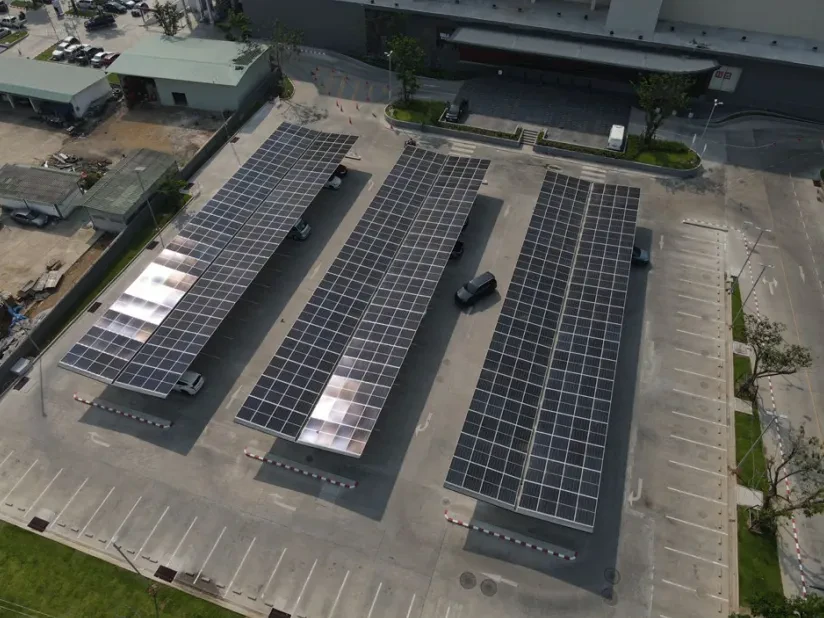
Nonetheless, Central Pattana recognizes that every challenge also presents an opportunity. The Company sees energy efficiency not only as a way to reduce costs, but also as a driver of long-term sustainability. The adoption of renewable energy solutions, including Solar Rooftop, Solar Carport, Building Integrated Photovoltaics (BIPV), and Solar Films, helps reduce greenhouse gas emissions while strengthening energy security. At the same time, digital technology is playing an increasingly important role in enabling more accurate energy monitoring and management. These technologies and innovations should therefore be studied and assessed in terms of investment opportunities and cost-effectiveness. In addition, encouraging employees to participate in energy innovation, such as through the Dream Team project, creates further opportunities to reduce business costs.
Business and Operational Challenges
- Maintaining a balance between growth and efficiency in energy administration and management As the portfolio expands and footfall increases, the Company must control energy intensity and reduce OPEX without compromising the thermal balance and customer experience.
- Space limitations and roof space regulations in some projects In addition, there are limitations on the government sector's Delayed Liberalization of Third Party Access (TPA), which currently does not allow the private sector to use the public electricity network system to transmit clean energy. Able to fully cross the area As a result, the Company Unable to fully utilize strategic benefits from areas awaiting development.
- High technology costs which may not be consistent with the importance given by the tenant on such matters. This is because green building technology requires a high investment in the initial stages. and requires behavioral cooperation from tenants To ensure consistent energy management throughout the building
Business Opportunities and Value Creation
- Increasing profits through operational excellence, with the Company changing energy saving targets to Return on Sustainability Investment (ROSI), which avoids utility costs and has a direct positive effect on an organization's profit margin.
- Driven by technology and employees By using digital technology AI, IoTBMS to accurately manage energy in real time, along with driving innovation from within, by giving employees the opportunity to co-invent energy solutions through the "Dream Team" project.
- Innovation for energy security By overcoming space limitations with alternative innovations such as building-integrated solar (BIPV) and solar films to serve as a mechanism to prevent risks from fluctuating electricity prices. and strengthen energy security and study the value of energy storage technology (Battery Energy Storage Systems: BESS) and smart electric grids (Microgrid) to prepare for free electricity trading on a Peer-to-Peer (P2P) basis if the government approves it to proceed.
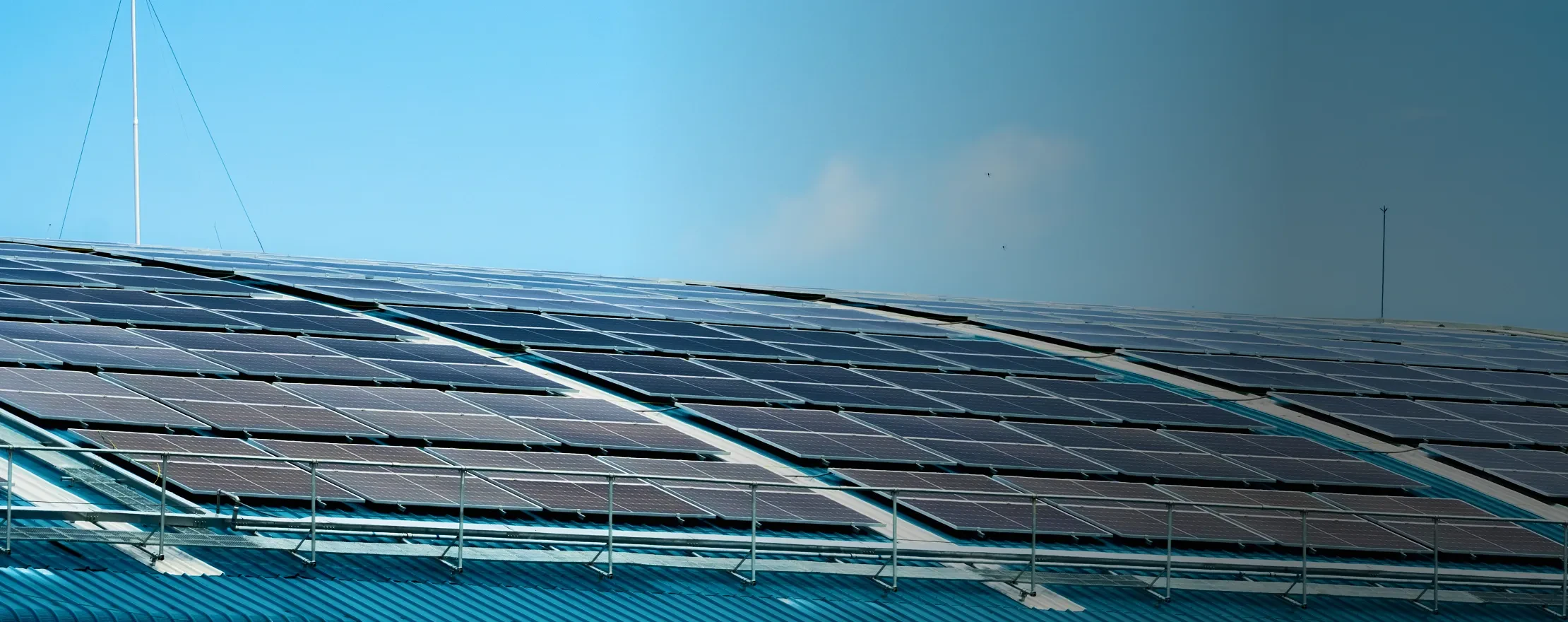
The transition to clean energy is not just about business. But it is an important step towards a sustainable future.
Central Pattana is ready to move forward in creating a balance between organizational growth and environmental care. So that every step we take brings value to society and the world.
Management Approach and Value Creation
In an era where climate change is a global challenge, Central Pattana is committed to being a part in alleviating the problem through efficient use of energy. To reduce environmental impact and cope with climate change. The company has implemented a strategy to increase the use of electricity from renewable energy and improve energy efficiency in all operating processes. The Carbon Footprint for Organization (CFO) guideline has been used to assess the amount of greenhouse gas emissions. and follow the ISO 14064-1 standard to assess the organization's carbon footprint.
The company's energy goals are clearly integrated into the organization's sustainability strategy under the Better Planet approach, which is one of the company's three core strategies: Better People, Better Planet, Strong Governance, with clearly defined strategic goals for reducing energy use and increasing the share of renewable energy. Ready to set indicators (Key Performance Indicators: KPIs) and report results to the Corporate Governance and Sustainable Development Committee regularly.
In addition, the Company is also evaluating impacts and business opportunities related to energy and climate change. Through the Double Materiality Assessment process to enhance understanding of long-term risks. and be able to adjust strategies flexibly and keep up with changes in the external context
The company focuses on creating energy security. and reduce operating costs through a systematic framework Guidelines have been established to cover internal operations and throughout the value chain as follows:
Policy and Supervision According to International Standards
The company systematically manages energy through the PDCA (Plan-Do-Check-Act) quality cycle. Central Pattana has applied for energy management system certification (ISO 50001) and uses the Building Management System (BMS) data management platform as a center for tracking efficiency. In addition, the Company has established branch energy committees to control, improve, and continually evaluate electricity use to be consistent with organizational goals. (BMS)

Policy and Supervision According to International Standards
Energy Usage Structure
The company manages 2 main types of energy sources in order to diversify cost risk:

Energy Usage Structure
- Non-renewable Energy Sources: The Company uses electricity supplied by the Provincial Electricity Authority (PEA) and the Metropolitan Electricity Authority (MEA) for air-conditioning systems and main lighting. Fossil fuel energy sources include oil used for emergency backup generators, vehicles, and emergency response drills, as well as LPG cooking gas used in food centers and tenant shops.
- Renewable Energy Sources: Renewable energy is generated from rooftop solar panels and used as a supplementary energy source to reduce electricity demand during daytime peak periods.
Division of Management Scope and Tenant Participation
The company divides the scope of electrical energy management into 2 main parts according to control ability:
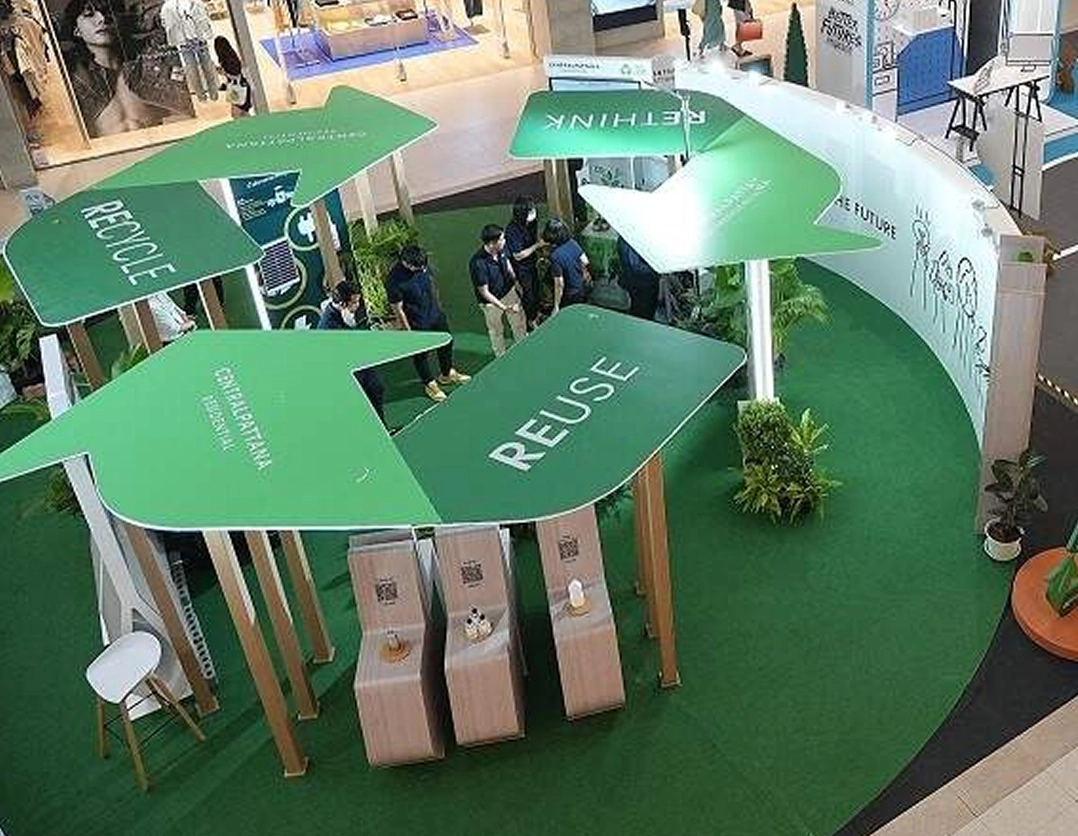
Green Partnership collaborates to reduce energy use
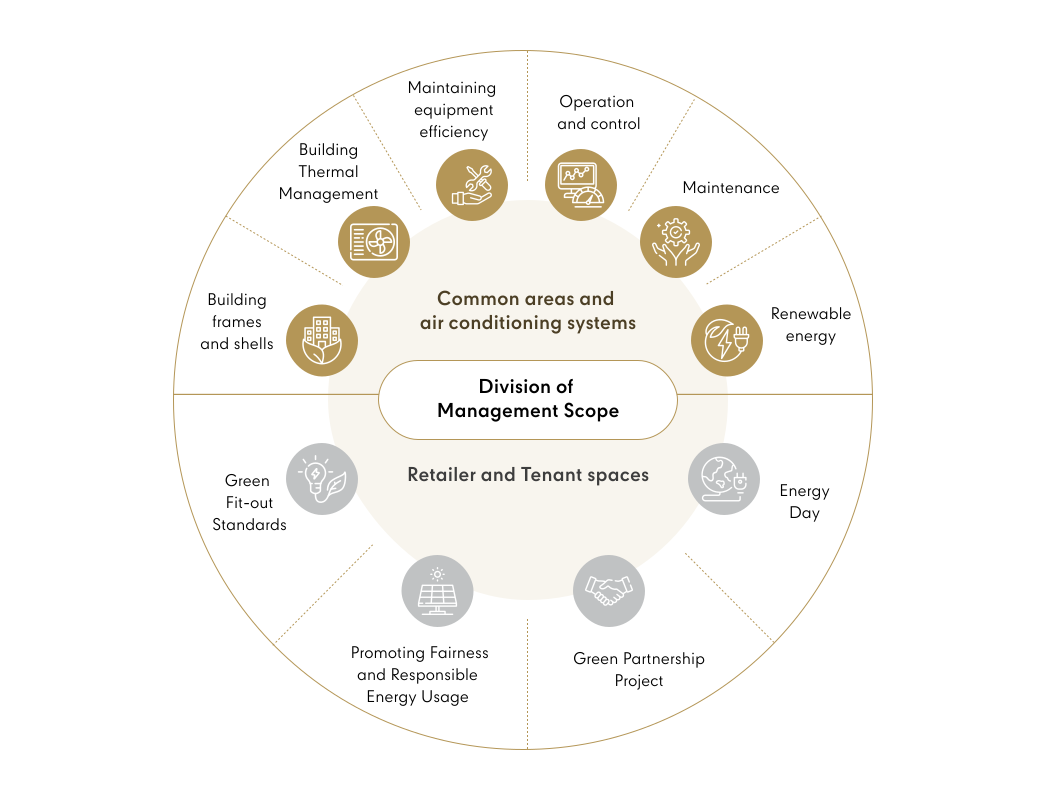
- Common areas and air conditioning systems which is controlled by the Company: Through enforcing engineering energy conservation measures in 6 dimensions.
-
Retailer and Tenant spaces: Central Pattana defines collaborative strategies to improve energy efficiency in line with international Green Lease standards, including:
- Establishing Green Fit-out Standards by integrating requirements for high-efficiency equipment selection into the Tenant Design Guidelines. These standards promote the use of energy-saving equipment with Thailand’s No. 5 energy efficiency label or equivalent, and 100% LED lighting systems, while supporting space design in accordance with international green building standards such as LEED, TREES-CS, EDGE, and other global standards.
- Promoting fairness in energy use through standardized sub-metering systems and pay-per-use electricity billing based on actual consumption, which encourages more efficient energy management within leased spaces.
- Inviting retailers to join the Central Pattana Green Partnership, under which tenants and the Company agree to share energy consumption data with each other for use in their respective sustainability reporting.
- Organize annual Energy Day activities in every branch. To encourage the cost-effective use of electrical energy. Save money and help reduce the organization's indirect greenhouse gas emissions.
Energy Conservation Measures
The Company effectively manages energy consumption in common areas by applying technology and innovation under its six-dimensional engineering measures framework.

Install solar cells on roofs and buildings.
-
Building frames and shells Emphasis on measures to improve the building envelope and frame according to architectural principles (Passive Design) to prevent the conduction and radiation of heat into the building, such as
- Install additional insulation on the roof and walls of the building.
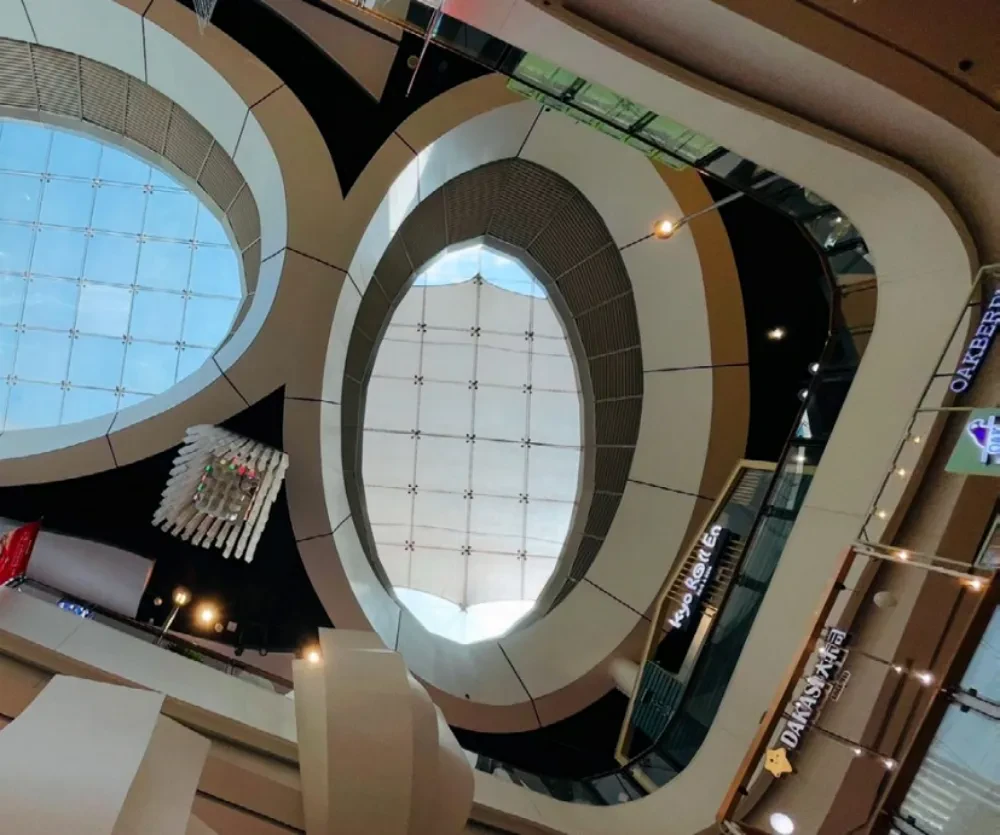
- Choose to use Active Skylight to control natural light exposure. and install a canvas covering the Skylight roof to reduce heat.
- Innovative integration of solar panels to cover the metal roof surface and concrete floor. This increases the ability to resist heat radiation entering the interior space.
-
Building Thermal Managementby managing to reduce heatentering the building. and improve the air balance system to be effective by experimenting with installing the innovative HVAC Air Scrubber in the air filling system. This reduces the heat load that is blown into the building. and create by-products that allow the air conditioner to work more efficiently.
-
Maintaining equipment efficiency by raising the efficiency of main equipment and ready to experiment with installing and developing engineering innovations to save energy, such as
- Converted to a high-efficiency chiller that uses refrigerants that have a very low global warming effect (GWP) Ready to change the fill media in the cooling tower.
- Install a motor speed control device. at the air handling unit (AHU) and change the pump motor to a high efficiency model
- Install a direct current (DC) air conditioning system that receives electricity directly from solar panels. To replace the split air conditioner in the elevator control room.
-
Operation and control by controlling the operation of the systems with automatic technology (Building Management System: BMS) and setting 3D in-depth work standards including:
- Technical aspects and innovations, for example, expanding from the BMS system to the AI Chiller Plant Optimization project by using intelligent technology (AI Software) to process real-time data from temperature and humidity sensors (IoT) to automatically control the cooling water in accordance with the actual heat load.
- Process aspects such as installing an air conditioning control system and improve the equipment's work process to be appropriately related to the amount of heat in each time period while maintaining a comfortable state of service users
- Personnel behavior and potential By organizing intensive training courses on environmental and energy management, including ISO 14001 and ISO 50001. To create a culture of sustainable energy conservation
-
Maintenance Emphasis on proactive and predictive maintenance of systems by using statistical data obtained from intelligent sensors and building management systems (BMS) to analyze in order to plan maintenance so that the equipment always work at full efficiency and reduce the rate of damage.
-
Renewable energy Expand investment in renewable energy sources to replace traditional energy sources. and set the installation of a solar power generation system as a mandatory engineering standard for every new project development. To aim for the goal of net zero greenhouse gas emissions (Net Zero)
Integration of Digital Technology and Intelligent Platforms
The Company has developed an Enterprise Environmental Information Management Center Platform, beginning with building energy management. The platform serves two key purposes:

- Performance Tracking: The platform enables branch teams and central teams to track energy efficiency performance and evaluate progress against targets in real time.
- Innovation Extension: The platform supports further innovation by integrating artificial intelligence (AI) and Internet of Things (IoT) technologies with the Chiller Plant Management system to reduce energy consumption with greater precision and efficiency.
Management of Electricity Demand
The company has put in place strategies to reduce the burden of peak electricity demand. By distributing the work of large equipment to avoid simultaneous use of electricity which reduces the demand for electrical power and increase the flexibility of the country's electrical network.

Management of Electricity Demand
Energy and Environmental Goals: Moving Towards Net Zero in 2050
Central Pattana has set a clear goal to be an organization that emits net zero greenhouse gas emissions (Net Zero Emission) by 2050, including important goals, including reducing the intensity of electricity use per unit area by 50% by 2030 and switching to renewable energy by 100% by 2050. In addition, the Company has set goals to reduce greenhouse gas emissions intensity per unit area by 50% by 2030. This is in line with the organization's climate policy and sustainability goals.

Reduce energy use by 50% by 2030.
-
To enable this goal to be implemented in a concrete way, the Company has continuously developed a long-term carbon reduction action plan (Net Zero Pathway). By setting operational guidelines that cover the improvement of energy efficiency. Expanding the use of renewable energy and reducing carbon emissions in the value chain. Central Pattana is in the process of improving the plan to be in line with the criteria of the Science Based Targets initiative (SBTi) for the real estate business group. and has the goal of applying for science-based target certification to enhance international credibility and ensure that the company's carbon reduction approach This is in line with the goal of limiting global temperature to no more than 1.5 degrees Celsius. Details of the action plans aligned with the SBTI can be found under the sectionClimate Mitigation
-
To enhance transparency in operations and increase environmental management options, the Company has also purchased renewable energy certificates (I-RECs) to compensate for electricity use. Reflects the intention to achieve Net Zero with an efficient, transparent and accountable approach.
Stakeholders Directedly Impacted

Shop operators, building tenants, residential project customers

Employees

Customers

Business Partners and Partners

Community / community representatives including government regulatory agencies, educational sector, independent organizations

Shareholders